South Florida is renowned for its beautiful beaches, vibrant culture, and year-round sunshine. However, it’s also home to unique plumbing challenges due to its low-lying geography, high water table, and susceptibility to hurricanes. One crucial aspect of plumbing that often goes overlooked but is of paramount importance in this region is backflow prevention. In this blog post, we’ll explore why backflow prevention is essential for South Florida and why A to Z Statewide Plumbing is your trusted partner in maintaining water safety and quality.
Understanding Backflow
Before delving into the significance of backflow prevention in South Florida, it’s important to understand what backflow is. Backflow occurs when the flow of water in a plumbing system is reversed, allowing contaminated water to enter the clean water supply. This reversal can happen due to various reasons, including sudden drops in water pressure, pipe bursts, or even back-siphonage from nearby sources of contamination.
The Risks of Backflow in South Florida
1. Saltwater Intrusion: South Florida’s proximity to the ocean means that saltwater intrusion is a constant threat to freshwater supplies. When backflow occurs, it can introduce saltwater into the drinking water system, rendering it undrinkable and harmful to appliances and plumbing fixtures.
2. Contaminated Water Sources: In a region prone to heavy rain and flooding, backflow can bring pollutants, debris, and bacteria from stormwater drainage systems or sewage lines into the potable water supply. This poses severe health risks to residents.
3. Cross-Connection Hazards: South Florida is home to a wide variety of industries, including agriculture, manufacturing, and healthcare, which use chemicals and substances that are potentially hazardous if they enter the drinking water supply. Backflow prevention safeguards against such cross-connection hazards.
The Role of Backflow Prevention Devices
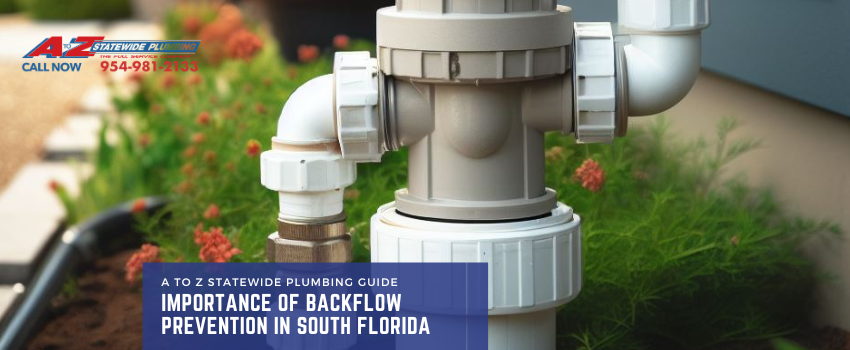
Backflow prevention devices are the unsung heroes of South Florida’s plumbing infrastructure. They act as barriers to prevent contaminated water from flowing backward into the clean water supply. These devices are installed at various points in a plumbing system, including residential, commercial, and industrial settings.
Types of Backflow Prevention Devices:
1. Air Gaps: This physical separation between the water supply and potential contaminants ensures no direct connection exists, preventing backflow.
2. Double-Check Valves: These valves are designed to prevent backflow by closing when water flow reverses, creating a barrier against contamination.
3. Reduced Pressure Zone (RPZ) Assemblies: RPZ assemblies are highly effective in preventing backflow in high-risk areas. They use a complex system of valves and check mechanisms to ensure water flows in one direction only.
The Role of A to Z Statewide Plumbing
A to Z Statewide Plumbing has been serving South Florida for decades, and we understand the unique challenges this region faces regarding water supply safety. Our skilled technicians are experts in backflow prevention and can help with:
1. Inspection and Testing: Regular inspections and testing of backflow prevention devices are essential to ensure they are functioning correctly and in compliance with local regulations.
2. Installation and Maintenance: We can install and maintain backflow prevention devices at residential, commercial, and industrial properties, providing you with peace of mind.
3. Compliance and Regulations: South Florida has specific regulations governing backflow prevention. We stay up-to-date with these regulations to ensure your property remains compliant.
In South Florida, preserving the safety and quality of the water supply is not just a matter of convenience; it’s a matter of public health and environmental sustainability. Backflow prevention is a critical component of achieving this goal. At A to Z Statewide Plumbing, we are committed to safeguarding your water supply, and our expert technicians are ready to ensure that your plumbing systems remain free from backflow risks. Don’t wait until it’s too late – protect your water supply with us today, and enjoy peace of mind in paradise.
Trending Topics Right Now
This post first appeared on http://www.atozstatewideplumbing.com