A well-functioning plumbing system is indispensable for the smooth operation of any residential or commercial property. One often overlooked but vital aspect of maintaining a reliable plumbing system is preventing backflow, which can jeopardize the quality of your water supply. As a dedicated plumbing service provider, we understand the significance of backflow prevention and aim to educate property owners about the importance of keeping their plumbing systems safe and sound.
In this comprehensive guide, we will delve into the concept of backflow, its causes, why it should concern you, and how backflow prevention devices can protect your plumbing system and the quality of your water supply. By familiarizing yourself with the various backflow prevention devices and industry best practices, you will gain a better understanding of how to keep your property safe from contamination and other potential hazards.
Successful backflow prevention not only ensures the ongoing functionality of your plumbing system but also plays a vital role in maintaining the well-being of all those who rely on your property’s water supply. As both property owners and plumbing professionals, we share a joint responsibility to protect our communities and uphold high standards for water quality in our homes and businesses. So join us as we explore the world of backflow prevention and provide you with the practical tools and knowledge you need to make informed decisions about your property’s plumbing safety.
To comprehend the importance of backflow prevention, it’s essential to understand what backflow is. In simple terms, backflow is the undesired reversal of water flow in a plumbing system. The reversal can cause contaminants, such as sewage, chemicals, fertilizers, and other hazardous substances, to enter the potable water supply. Backflow typically occurs due to two primary reasons:
Backpressure is created when the pressure in a non-potable system exceeds the pressure in the potable water supply. It can be caused by factors such as elevated piping, heating systems, and high demand from industrial equipment or processes.
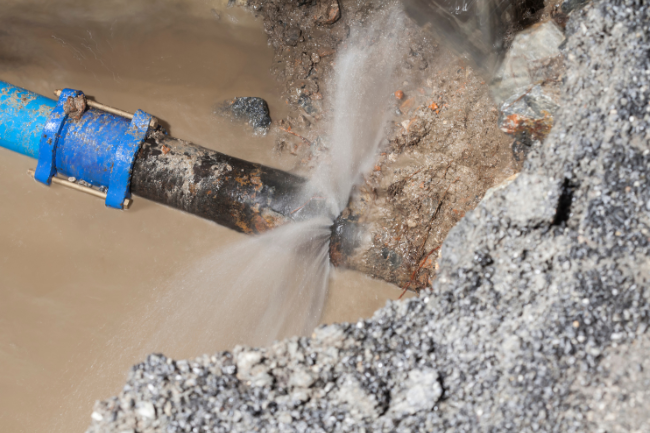
Backsiphonage occurs when negative pressure in the potable water system causes an unwanted suction of contaminated water. This can arise from circumstances such as a water main break, fire hydrant usage, or plumbing system repairs.
Backflow can have serious consequences for property owners, occupants, and the community. Some of these consequences include:
The most direct impact of backflow is the contamination of the potable water supply, which can lead to health risks for those who consume it.
Governments and health authorities enforce strict regulations to protect water quality, and failure to implement suitable backflow prevention measures can result in fines, penalties, and property closure.
For businesses, a backflow event can lead to negative publicity, damage reputation, and significantly impact consumer confidence.
Various backflow prevention devices are available to protect your property’s plumbing system and water supply. Some of the most common devices include:
An air gap is a simple yet effective backflow prevention method that entails maintaining a physical separation between potable water and potential contaminants. Air gaps must be carefully sized and installed to comply with regulations and ensure their effectiveness.
An atmospheric vacuum breaker (AVB) is a mechanical backflow preventer installed on individual outlets, such as faucets and hose connections, and works by preventing backsiphonage through an accessible vent that closes when water pressure is applied.
A pressure vacuum breaker (PVB) is another device designed to prevent backsiphonage, typically installed on the main water supply line. PVBs include a spring-loaded check valve and an air vent, which together ensure adequate airflow and protect against the ingress of contaminants.
The reduced pressure zone (RPZ) device is a sophisticated backflow preventer that guards against both backpressure and backsiphonage. Featuring two independently operating spring-loaded check valves and a pressure relief valve, an RPZ device offers robust protection—even in the presence of debris and varying water pressure.
Proper backflow prevention requires regular testing and maintenance to ensure the ongoing effectiveness of your chosen devices. Here are some key considerations for maintaining backflow preventers:
Backflow prevention devices should be inspected and tested annually by a licensed professional. Annual inspections can help identify potential weaknesses or failures before problems escalate.
Ensure that your property’s backflow prevention measures meet local regulations and guidelines, as these standards are designed to protect public health and safety.
If a backflow preventer becomes irreparably damaged or is approaching the end of its useful life, it’s crucial to replace it promptly to uphold the integrity of your plumbing system and water supply.
No property owner can afford to overlook the importance of backflow prevention in safeguarding their plumbing system and water supply. By understanding the causes, consequences, and appropriate preventive measures, you can ensure that your property remains safe from the threats posed by backflow events. Regular testing, maintenance, and professional assistance are key components of an effective backflow prevention strategy.
The Irish Plumber’s team of experienced plumbers is well-equipped to handle all your backflow prevention needs, from device installation and testing to ongoing maintenance and expert advice. Don’t wait for a backflow emergency to occur — protect your property and its occupants by taking a proactive approach to backflow prevention today.

The sudden arrival of unnatural or unpleasant odors in your home is never a reassuring thing, especially when the source of the smell is somewhere in your home’s plumbing system. Are my drains clogged? What if there is a harmful sewer gas leak? If I need to fully renovate my plumbing, how much will it cost me?
When your air conditioner is having a rough time, it’s important to get it serviced as soon as possible. This will help keep any problems small, and avoid consequences like damage to the compressor and sky-high electric bills that can happen when an air conditioner is struggling. But that means you need to notice right away that a problem is happening.
How can you tell that your air conditioner needs repair? Here are some key signs. If you notice any of these, get AC repair from a qualified technician.
Do you hear any sound at all that your air conditioner hasn’t always made? Well, it shouldn’t be doing that. A buzz, bang, rattle, click, bubble, hiss, or anything else besides the gentle hum of the compressor and whoosh of the fan is a problem that requires central air conditioning repair in Cedar Grove, NJ.
Air conditioners should be odorless. Certain problems can produce odors like mildew, sourness, hot dust, melting plastic, or even fish. Any of these require repair. In particular, if your air conditioner smells of anything hot, melting, or fishy, it’s a sign of electrical fire. Turn it off and get professional assistance before using it again.
Does your air conditioner start and stop very often? It should only do this a few times an hour. If it’s happening every few minutes, that’s called short cycling. This is both a symptom of another problem, perhaps a refrigerant leak or airflow blockage, and also a cause of other potential problems, like overheating and compressor failure.
Because many AC issues cause the unit to have to work harder as it tries to get the job done, they will force the air conditioner to use more and more energy. If your thermostat is set the same and you haven’t gotten any new energy-sucking appliances, your electric bill should not get higher each month.
Hot spots? Cold spots? Uneven distribution of the AC’s cooled air is a sign that something is definitely wrong. Don’t just use a fan to try to blow the cool air to where you want it. Get repair before the problem gets worse.
If this happens, you’ll know right away that you’ve got a problem. Do you need to get a technician out there ASAP? Check a few things first. Did the system trip a circuit breaker? Was your thermostat accidentally bumped into, leaving it on the wrong setting or programming? If not, contact us for prompt repair to restore your AC’s cooling power.
Finally, if you spot any signs that there’s moisture where there shouldn’t be, get repairs before you end up with serious water damage to your home. Dripping, water stains, or mold growth should always be taken seriously.
If you notice any of these signs, or if you have any questions about your air conditioner, we’d love to hear from you.
Contact MarGo Plumbing Heating Cooling Inc. today with AC concerns or any questions about your HVAC system!
The post 7 Signs Your Air Conditioner Needs Repair first appeared on MarGo Plumbing Heating Cooling Inc..
This post first appeared on https://margoplumbing.com

Commercial plumbing is often subjected to far greater pressures than its residential counterparts. In most instances, commercial systems are more complex and see far heavier usage than the plumbing found in a typical household. After all, residential plumbing only has to serve the limited needs of the family living in the home. Commercial plumbing, in many instances, has to provide service to dozens, perhaps even hundreds of people, sometimes even around the clock.

Whether you are in the market to buy a house or are simply updating your kitchen appliances, energy efficient sinks may be just what you’re looking for.
Many homeowners fall into the trap of believing that any sleek, low-flow faucet automatically guarantees water efficiency. However, this assumption can be misleading. True water efficiency hinges on specific criteria established by the Environmental Protection Agency (EPA), a key player in environmental protection and sustainability standards.
The EPA has set clear benchmarks for what constitutes a water-efficient faucet. The standard flow rate for faucets, as per the EPA, stands at 2.2 gallons per minute (GPM). For a faucet to earn the label of being truly water-efficient, it must operate at a flow rate of 1.5 GPM or less. This distinction is crucial because it ensures a significant reduction in water usage, contributing to both environmental conservation and household water savings.
Moreover, low-flow faucets are often designed with air-infusion technology. This innovative approach mixes air with water, creating a fuller stream that provides the sensation of more water while actually using less. This technology not only aids in water conservation but also maintains user satisfaction by delivering a robust flow for everyday tasks.
Understanding the technology behind water-efficient faucets and the standards set by the EPA can help homeowners make informed decisions. By choosing faucets that meet these rigorous criteria, individuals can contribute to water conservation efforts while enjoying the benefits of modern, efficient plumbing fixtures.
.png?width=650&height=433&name=kitchen_faucet%20(1).png)

There are plenty of ways you can save money as a homeowner, such as:
Updating your appliances, including your kitchen faucets, can help you increase your home’s energy efficiency and save you money. Below are affordable kitchen faucets that can help save you money while being environmentally conservative.
The hands-free faucet, which is also referred to as touchless or automatic, is an ideal innovation for those who detest the germ-infested action of manually turning on the faucet with their hands. This innovative technology employs sensors to detect your presence, activating the flow of water automatically, thereby eliminating the need for physical contact.
Additionally, this smart faucet is designed to be eco-friendly. Unlike traditional faucets that waste water, the hands-free model is engineered to use less water by recycling the water it uses. This not only conserves water but also reduces your monthly water bills, making it a cost-effective and environmentally responsible choice for your home. Whether you’re cooking, cleaning, or simply washing your hands, the hands-free faucet offers a convenient, hygienic, and sustainable solution to meet your daily needs.
The pull-down faucet stands out as a highly favored choice among various types of kitchen faucets. It features a versatile spray nozzle that seamlessly extends from the spout, offering users the convenience of adjusting it into three or four distinct settings to suit their specific needs. Unlike the weaker stream typically produced by standard spray nozzles, the pull-down faucet delivers a significantly stronger flow of water, enhancing its functionality and user experience.
These faucets are designed with flexibility in mind, allowing you to easily switch off the spray feature while continuing to utilize the regular faucet function. This added versatility makes the pull-down faucet a practical and popular option for modern kitchens, combining ease of use with efficient performance.
Single-handle faucets have gained immense popularity not only for their sleek appearance but also for offering users precise control over water pressure and temperature with just one hand. This design simplicity makes them an ideal choice for modern kitchens and bathrooms, blending functionality with aesthetics.
Furthermore, these faucets are especially suitable for those looking to upgrade to a touchless sink system or install faucets that activate automatically when hands are detected under the water stream. This feature not only enhances hygiene by minimizing touchpoints but also adds a level of convenience and efficiency to daily routines, making them a smart addition to any home.
Express Sewer and Drain provides unrivaled plumbing services in Sacramento County including faucet repair and replacement at unbeatable rates. We have families too and understand our lives are packed with things to do and errands to get done.
We do faucet repair and replacement right the first time. Our experts can help you resolve any faucet issue including:
Have questions or want to schedule a faucet repair service? Reach out any time! We’re here to help.
This post first appeared on https://www.expresssewer.com

Leaky pipes and flooded floors are not ideally what people enjoy coming home to after a tiring work day. Who wants to deal with trying DIY plumbing repair quick fixes and attempting to find an after-hours plumbing service, on top of cleaning up in an attempt to limit water damage? You guessed it- no one does.
Luckily trenchless water line replacement is a great, cost-effective solution to help you in times of need. Keep reading to learn more about trenchless water line replacement costs.
As concerns over the impacts of climate change and environmental degradation continue to grow, the need for sustainable practices in all aspects of our lives is becoming increasingly crucial. In the world of plumbing, this movement toward eco-friendly methods is known as “green plumbing.” These sustainable plumbing solutions aim to reduce water usage, conserve energy, and diminish the environmental impact without compromising the efficiency or quality of the services provided. Being a responsible plumbing service provider, we are committed to keeping up with the latest industry advancements and incorporating environmentally-friendly practices into our services.
In this article, we will explore the various sustainable plumbing solutions available for both residential and commercial properties, showcasing how these innovative techniques can contribute to healthier homes, businesses, and the environment. We will discuss a range of topics, including water-saving fixtures, high-efficiency appliances, and responsible waste disposal methods, to help you understand the value of adopting eco-friendly plumbing practices in your property.
By choosing sustainable plumbing methods, you not only contribute to a cleaner, greener planet, but you can also save on water and energy bills in the long run. Our goal is to educate and empower property owners to make informed choices when it comes to their plumbing needs while also providing top-quality services that align with modern environmental values.
One of the most effective sustainable plumbing solutions is the adoption of water-saving fixtures. These are specifically designed to reduce water usage, leading to significant savings on your water bills and contributing to a greener planet. Here are some popular water-saving fixtures that can be easily integrated into your property:
Another key aspect of sustainable plumbing is the use of high-efficiency appliances that consume less water and energy. These modern appliances can significantly contribute to water and energy conservation in your property:
Proper waste disposal plays a critical role in sustainable plumbing practices. Eco-friendly waste disposal methods prevent harmful substances from entering the sewer system and the environment:
Routine maintenance of your plumbing systems is crucial to ensure their optimal efficiency and prolong their lifespan. Here are some eco-friendly maintenance practices that support sustainable plumbing:
Regular Inspections and Leak Detection: Regular plumbing inspections help detect leaks early, preventing water waste and potential damage to your property. Addressing leaks promptly can result in significant water savings and a greener plumbing system.
Cleaning with Eco-Friendly Products: Using eco-friendly cleaning products and drain treatments helps minimize the presence of harmful chemicals in your plumbing system, reducing the environmental impact. These biodegradable products are safe for both your plumbing and the planet.
Adopting sustainable plumbing solutions is more than just a trend – it’s a responsible move towards a greener future for our planet. By incorporating water-saving fixtures, high-efficiency appliances, responsible waste disposal methods, and eco-friendly maintenance practices, you can make a significant positive impact on the environment while enjoying the added benefits of reduced costs and improved performance.
Our team is committed to providing comprehensive and eco-friendly plumbing solutions to create a cleaner, greener world, one property at a time. If you are curious about how to make your plumbing system more sustainable or want to learn more about our environmentally-friendly plumbing services, contact The Irish Plumber today. Together, we can build a better, more sustainable future through green plumbing practices.
Knowing how to stay cool when your AC is broken is more than a matter of comfort – it is a matter of safety. To avoid suffering in the heat while you wait for your AC repairs in Phoenix, the HVAC professionals at Wolfgangs have compiled a list of effective strategies for beating the heatCONTINUE READING »
The post How To Stay Cool When Your AC Is Broken appeared first on Wolfgangs Cooling, Heating & Plumbing.
This post first appeared on https://www.thetrustedplumber.com

While we could go on for days defining every plumbing tool, fixture, and practice out there, we’ve condensed that information and included the most relevant plumbing terms you’ll need and want to know for basic plumbing repair.