Author: admin

Safeguarding South Florida’s Water Supply: The Importance of Backflow Prevention

The Importance of Backflow Prevention

South Florida is renowned for its beautiful beaches, vibrant culture, and year-round sunshine. However, it’s also home to unique plumbing challenges due to its low-lying geography, high water table, and susceptibility to hurricanes. One crucial aspect of plumbing that often goes overlooked but is of paramount importance in this region is backflow prevention. In this blog post, we’ll explore why backflow prevention is essential for South Florida and why A to Z Statewide Plumbing is your trusted partner in maintaining water safety and quality.

Understanding Backflow

Before delving into the significance of backflow prevention in South Florida, it’s important to understand what backflow is. Backflow occurs when the flow of water in a plumbing system is reversed, allowing contaminated water to enter the clean water supply. This reversal can happen due to various reasons, including sudden drops in water pressure, pipe bursts, or even back-siphonage from nearby sources of contamination.

The Risks of Backflow in South Florida

1. Saltwater Intrusion: South Florida’s proximity to the ocean means that saltwater intrusion is a constant threat to freshwater supplies. When backflow occurs, it can introduce saltwater into the drinking water system, rendering it undrinkable and harmful to appliances and plumbing fixtures.

2. Contaminated Water Sources: In a region prone to heavy rain and flooding, backflow can bring pollutants, debris, and bacteria from stormwater drainage systems or sewage lines into the potable water supply. This poses severe health risks to residents.

3. Cross-Connection Hazards: South Florida is home to a wide variety of industries, including agriculture, manufacturing, and healthcare, which use chemicals and substances that are potentially hazardous if they enter the drinking water supply. Backflow prevention safeguards against such cross-connection hazards.

The Role of Backflow Prevention Devices

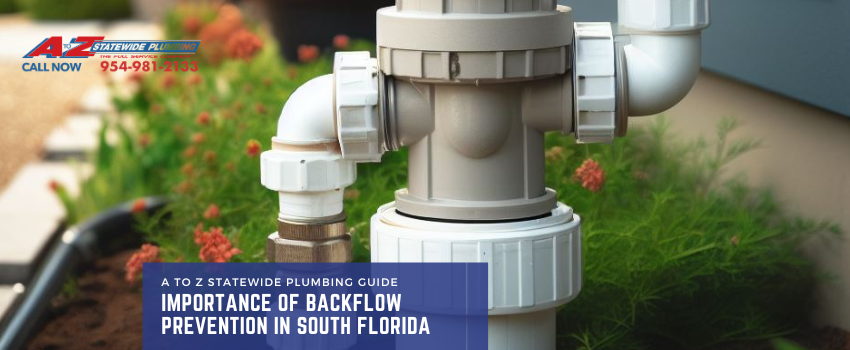
Backflow prevention devices are the unsung heroes of South Florida’s plumbing infrastructure. They act as barriers to prevent contaminated water from flowing backward into the clean water supply. These devices are installed at various points in a plumbing system, including residential, commercial, and industrial settings.

Types of Backflow Prevention Devices:

1. Air Gaps: This physical separation between the water supply and potential contaminants ensures no direct connection exists, preventing backflow.

2. Double-Check Valves: These valves are designed to prevent backflow by closing when water flow reverses, creating a barrier against contamination.

3. Reduced Pressure Zone (RPZ) Assemblies: RPZ assemblies are highly effective in preventing backflow in high-risk areas. They use a complex system of valves and check mechanisms to ensure water flows in one direction only.

The Role of A to Z Statewide Plumbing

A to Z Statewide Plumbing has been serving South Florida for decades, and we understand the unique challenges this region faces regarding water supply safety. Our skilled technicians are experts in backflow prevention and can help with:

1. Inspection and Testing: Regular inspections and testing of backflow prevention devices are essential to ensure they are functioning correctly and in compliance with local regulations.

2. Installation and Maintenance: We can install and maintain backflow prevention devices at residential, commercial, and industrial properties, providing you with peace of mind.

3. Compliance and Regulations: South Florida has specific regulations governing backflow prevention. We stay up-to-date with these regulations to ensure your property remains compliant.

In South Florida, preserving the safety and quality of the water supply is not just a matter of convenience; it’s a matter of public health and environmental sustainability. Backflow prevention is a critical component of achieving this goal. At A to Z Statewide Plumbing, we are committed to safeguarding your water supply, and our expert technicians are ready to ensure that your plumbing systems remain free from backflow risks. Don’t wait until it’s too late – protect your water supply with us today, and enjoy peace of mind in paradise.

Trending Topics Right Now

This post first appeared on http://www.atozstatewideplumbing.com
Critical Plumbing Emergency Tips

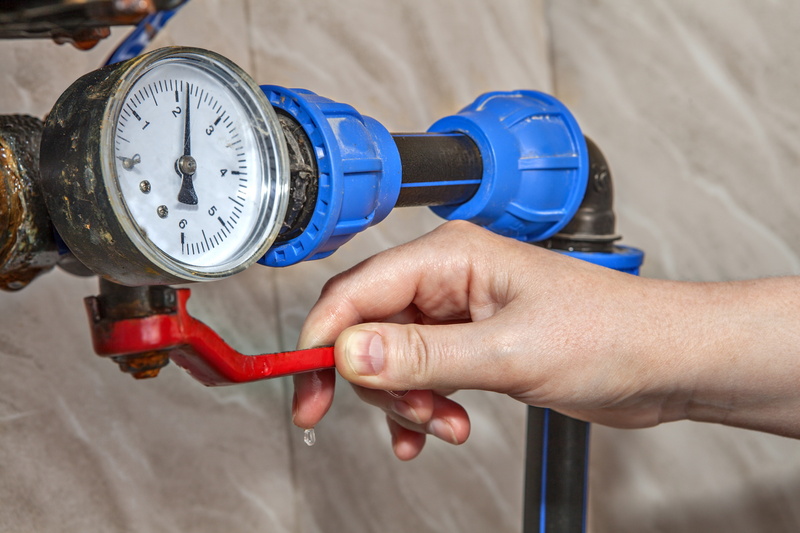
hand-turning-off-main-water-shut-off-valve

It’s easy to panic in an emergency. In our frantic urgency, we can make things worse, or take too long to take simple steps that mitigate the damage. In a plumbing emergency, that time could mean the difference between a minor mess and a flooded bathroom. 

Knowing what steps you should take can make your reaction time much faster and help you avoid missteps. Familiarize yourself with these tips, and the next time you have a plumbing emergency, you’ll be better prepared to do what’s necessary.

Know How to Shut the Water Off

It’s generally pretty easy to locate the water shut-off to various fixtures. But in the panic of an emergency, your haste can make this harder. Before any emergency occurs, go through your home and check where the shut-off valves are. If something breaks or leaks, you’ll be able to stop water from flowing to that particular section of your plumbing.

You should also know where your main water shut-off is. If you have a leak or break in a section of plumbing you can’t shut off individually, you can cut off the water supply to your whole home. This will be located where the water enters your house, generally in the basement on the side of your house facing the street, or facing your well if you don’t have municipal water.

Know How to Handle Frozen Pipes

When winter temperatures get severe, frozen pipes are a common plumbing emergency. If this happens to you, the first thing to know is not to try to defrost the pipe yourself with a space heater or hair dryer. This can cause such rapid expansion that it triggers a sudden rupture. Instead, call for an emergency plumber in Pine Brook, NJ.

To avoid having this happen at all, your best bet is to never lower your home’s heat below 55 degrees, even when you’re going to be away and don’t need your home to be warm.

Don’t Hesitate—Get Help

If you’re not sure whether something should be considered an emergency, err on the side of caution. Get professional plumbing help as quickly as you can. Blocked drains throughout your house can quickly turn into flooding sewage if you don’t take it seriously. A trickling leak can pour gallons of water into your subfloor in a matter of hours. 

Another time to get emergency plumbing help is when the problem is an emergency to you personally. A child’s lost tooth or grandma’s engagement ring being lost down the sink may not flood your home, but if it matters deeply to you, it matters to us, too. Stop using that drain, cover it so nobody else unknowingly uses it, and call for help.

Rely on Qualified Professionals

It’s all too easy for something to go seriously wrong when people attempt DIY plumbing, and that can result in serious emergencies and water damage. Avoid this by having a plumber you trust and relying on them for quick, effective, and safe solutions to your plumbing problems.

Contact MarGo Plumbing Heating Cooling Inc. today with any questions about your plumbing!

The post Critical Plumbing Emergency Tips first appeared on MarGo Plumbing Heating Cooling Inc..

This post first appeared on https://margoplumbing.com

Avoid Costly Repairs This Fall With These 5 Simple Plumbing Checks

As the scorching Arizona summer slowly fades into a more pleasant fall season, it’s essential for homeowners to shift their focus towards preparing their homes for the changing weather. While many individuals concentrate on outdoor maintenance tasks, such as landscaping and pool care, it’s equally important not to overlook the plumbing system. By conducting a

CONTINUE READING »

The post Avoid Costly Repairs This Fall With These 5 Simple Plumbing Checks appeared first on Wolfgangs Cooling, Heating & Plumbing.

This post first appeared on https://www.thetrustedplumber.com

Everything You Need to Know About Municipal Drainage Systems

municipal drainage system

Municipal drainage systems may not always be in the spotlight, but they play a pivotal role in our daily lives. These intricate networks of pipes, channels, and infrastructure are responsible for managing rainwater, wastewater, and storm runoff in our cities and communities

Understanding municipal drainage systems is essential for anyone who cares about urban planning and environmental sustainability or for those who simply want to know more about the unseen infrastructure that keeps our cities functioning smoothly. Read More

Are there any eco-friendly plumbing options available?

In an era where environmental consciousness is becoming increasingly important, it’s essential to consider eco-friendly options in all aspects of life, including plumbing. The field of plumbing has seen significant eco-friendly advancements, aimed not only at conserving water but also at reducing energy consumption and minimizing waste. This resource will explore various sustainable plumbing options that can help us to build a greener and more sustainable world.

Exploring Eco-Friendly Plumbing Solutions for a Sustainable Future

Low-Flow Fixtures

Low-flow fixtures are designed to reduce the amount of water that flows through them, thereby conserving water and energy. These fixtures, which include faucets, showerheads, and toilets, use advanced technology to provide the same level of performance while using significantly less water. For example, a conventional showerhead may use up to 5.5 gallons of water per minute, while a low-flow model uses no more than 2.5 gallons per minute – a reduction of more than 50%. Similarly, low-flow toilets use only 1.28 gallons per flush compared to the traditional models that use 3.5 to 7 gallons per flush. By choosing to install low-flow fixtures in your home, you can significantly reduce your water usage, thereby reducing your environmental footprint and saving money on your utility bills.

Dual Flush Toilets

Dual flush toilets are another eco-friendly plumbing option. This toilet model comes with two flushing options: a half flush for liquid waste and a full flush for solid waste. The half flush uses significantly less water than the full flush, making it an ideal choice for conserving water. For instance, while a conventional toilet uses approximately 1.6 gallons of water per flush, the half flush in a dual-flush toilet uses only about 0.8 gallons. This system gives the user control over their water usage and can lead to substantial water savings over time. Not only does this help to conserve our planet’s most vital resource, but it also results in lower utility bills, making dual flush toilets a win-win for both the environment and the consumer.

Tankless Water Heaters

Tankless water heaters, also known as on-demand water heaters, are an eco-friendly plumbing option that can significantly reduce energy consumption. Unlike traditional water heaters that continuously heat and store water in a tank, tankless water heaters heat water only as it’s needed, which eliminates the energy waste associated with maintaining a tank of hot water.

When a hot water tap is turned on, cold water travels through a pipe into the unit, where a gas burner or an electric element heats the water. As a result, tankless water heaters deliver a constant supply of hot water, and there’s no need to wait for a storage tank to fill up with enough hot water.

According to Energy.gov, for homes that use 41 gallons or less of hot water daily, tankless water heaters can be 24%–34% more energy efficient than conventional storage tank water heaters. They can be 8%–14% more energy efficient for homes that use a lot of hot water — around 86 gallons per day.

Furthermore, tankless water heaters have a longer lifespan, typically lasting more than 20 years, compared to traditional water heaters, which usually last 10 to 15 years. This means fewer units ending up in landfills and a lower environmental impact over time. By choosing a tankless water heater, you can not only save energy and reduce your utility bills, but also contribute to a more sustainable planet.

PEX Piping

PEX (cross-linked polyethylene) piping is a relatively new entrant in the plumbing industry, quickly gaining popularity due to its eco-friendly and efficient qualities. Unlike traditional piping materials such as copper or PVC, PEX piping is flexible and requires fewer connectors and fittings, which leads to easier installation and less potential for leaks. This reduction in potential water loss not only conserves water but also saves on repair costs. Moreover, PEX pipes have a high resistance to scale and chlorine, ensuring a long lifespan and reducing the need for replacement. These pipes also have superior insulation properties, minimizing heat loss when used in hot water applications, leading to energy savings. Considering these benefits, PEX piping is an excellent choice for those looking to incorporate eco-friendly plumbing solutions in their homes or businesses.

Rainwater Harvesting Systems

Rainwater harvesting is a sustainable practice that involves capturing and storing rainwater for reuse, instead of allowing it to run off. These systems can be simple, such as barrels placed under downspouts, or more complex, involving pumps and filtration systems. Rainwater harvesting systems are highly beneficial for multiple reasons. Firstly, they reduce the reliance on municipal water supplies, thereby conserving a significant amount of water. Secondly, the harvested rainwater can be used for various purposes such as irrigation, flushing toilets, washing clothes, or even drinking if properly treated. Additionally, these systems can help to manage stormwater runoff, decreasing the risk of floods and soil erosion. Implementing a rainwater harvesting system can significantly contribute to water conservation, leading to lower water bills, and promoting a more sustainable and eco-friendly lifestyle.

By taking advantage of these eco-friendly plumbing options, homeowners and businesses can help ensure a more sustainable future. By reducing water consumption and energy use, we can protect our natural resources while also cutting costs. With careful consideration and the right materials, plumbing systems can become much greener. 


+1-877-959-3534