FAQ: What’s an Automatic Shut-Off Valve?
 If you’ve ever dealt with a plumbing leak, then you’re probably very well aware that they can very quickly become a costly expense. No, we’re not just talking about the cost of fixing a leaking or burst pipe, but the immense amount of wasted water that can come from it as well. Water that gets wasted from burst pipes or leaks is essentially going on your budget, so if you’re in the market to save a bit of money on your plumbing in Clifton, NJ—you might want to invest in an automatic shut-off valve.
If you don’t know what these handy devices are, don’t fret. Not many homeowners do! These are pipe parts that are designed to monitor the water pressure in your plumbing system. When a leak or burst occurs, this part then identifies that there has been a drastic change in pressure, and it acts accordingly to cut the flow of water. Read on to learn more!
Why Does Pressure Matter?
As we mentioned earlier, an automatic shut-off valve measures the pressure in your pipes and shuts off the water flow if it detects a change in pressure. Pressure matters in this case because when there’s a break or leak in your pipes, water will flow at an irregular pace, creating an obvious change in pressure that’s easy to detect.
This means that your plumbing system won’t be wasting water when a leak or burst occurs, because the automatic shut off valve can already detect that something is wrong.
Can’t I Just Shut Off My Water?
While sure, you can shut off your water when you detect that there’s a plumbing leak occurring, but it’s also a safe bet that you won’t always be around when plumbing leaks do happen. If you’re on vacation and one of your pipes freezes and bursts, only to thaw and waste hundreds of gallons of water? That’s as close to a nightmare as you’re going to get!
An automatic shut-off valve automatically senses the water pressure change and cuts off the water without the need for a homeowner to do it manually. The extra layer of protection can save you a ton of money and give you peace of mind, knowing that your plumbing is safe even when you’re away.
How Do I Know If I Have an Automatic Shut-Off Valve?
That’s a good question! Unfortunately, we don’t have the magic capabilities to know exactly if you’ve got one already installed or not. However, if you’ve got access to a professional plumber, that question can be answered pretty easily. A plumber will know exactly where to look for an automatic shut-off valve in your home. For anyone not well-acquainted with plumbing systems, it could prove troublesome with many web searches and wasted time trying to locate your valve.
Just call a plumber that knows what they’re doing. They can help ensure that your automatic shut-off valve is working properly. And, if you don’t have one, a plumber can get one installed so that you’re ready for anything.
Give your local plumbers a call today for your automatic shut-off valve installation!
This post first appeared on https://margoplumbing.com
 Ahh! The Holidays are nearly here! We’ve only got 23 days until Christmas, 20 days until Hanukkah, and 24 days until Kwanzaa! Before you know it, you’ll be gathering around the table with friends and family, opening lots of presents, and of course, regifting some of those presents.
 A clog can appear in a toilet, sink, or shower for a number of reasons. It may have resulted from a recent event, like placing something in the toilet that should’ve been placed in the trash. The problem may have been building for some time. For example, it may have been taking longer for a tub to empty. Plumbing problems don’t have a schedule and need immediate attention. Call one of the best
  Prevention
 This isn’t something you want to see: a reddish or brownish discoloration coming from the taps in your house. Something isn’t right if you can’t get clear, non-cloudy water in your house. But what?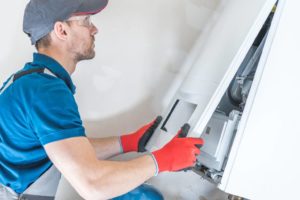
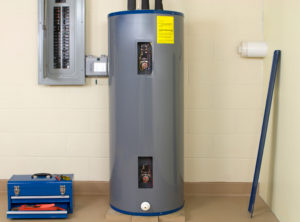
 There is really nothing quite worse than stepping into a cold shower on a chilly winter morning… See, your hot water heater is incredibly important to your comfort, and when something goes wrong with it, you are bound to notice!
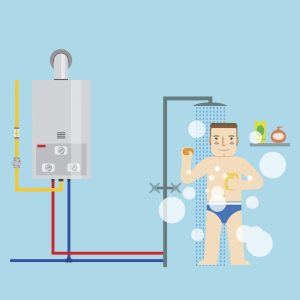 We know, homeowners rarely think about their water heaters. Except on the odd occasion when you’re having family over and all of a sudden your showers and sinks are all spraying out cold water and there’s nothing you can do about it. Well, what if we told you that there’s a new, technological solution to that problem?
 Given the sheer volume of do-it-yourself guides and tips available online, it can be tempting to think that every household project can be handled with a box of tools and a YouTube video. While there are plenty of DIYs that are absolutely feasible, such as building a birdhouse, refinishing a table, or creating your own ornaments, there are some jobs that are best left to the professionals. The technical know-how, experience, and training necessary to handle any HVAC system isn’t something you can readily acquire from a few pictures and step-by-step instructions in a blog. The truth is that heating repair is always best performed by someone with the appropriate expertise. In fact, attempting a DIY HVAC repair could be hazardous both to you and your equipment.
 When it comes to complex equipment and systems, small issues can easily transform into major problems. You’ve probably already heard that it’s a good idea to get your heater or conditioner fixed as soon as you know it needs it. Waiting could easily allow whatever is wrong to become worse. However, attempting to repair it yourself could be substantially worse. It’s certainly not a bad idea to learn about your HVAC system, and curiosity is certainly understood. Unfortunately, passion isn’t the same thing as skill. You shouldn’t risk damaging your HVAC system as part of a learning exercise. If you have questions, you should ask the technician.