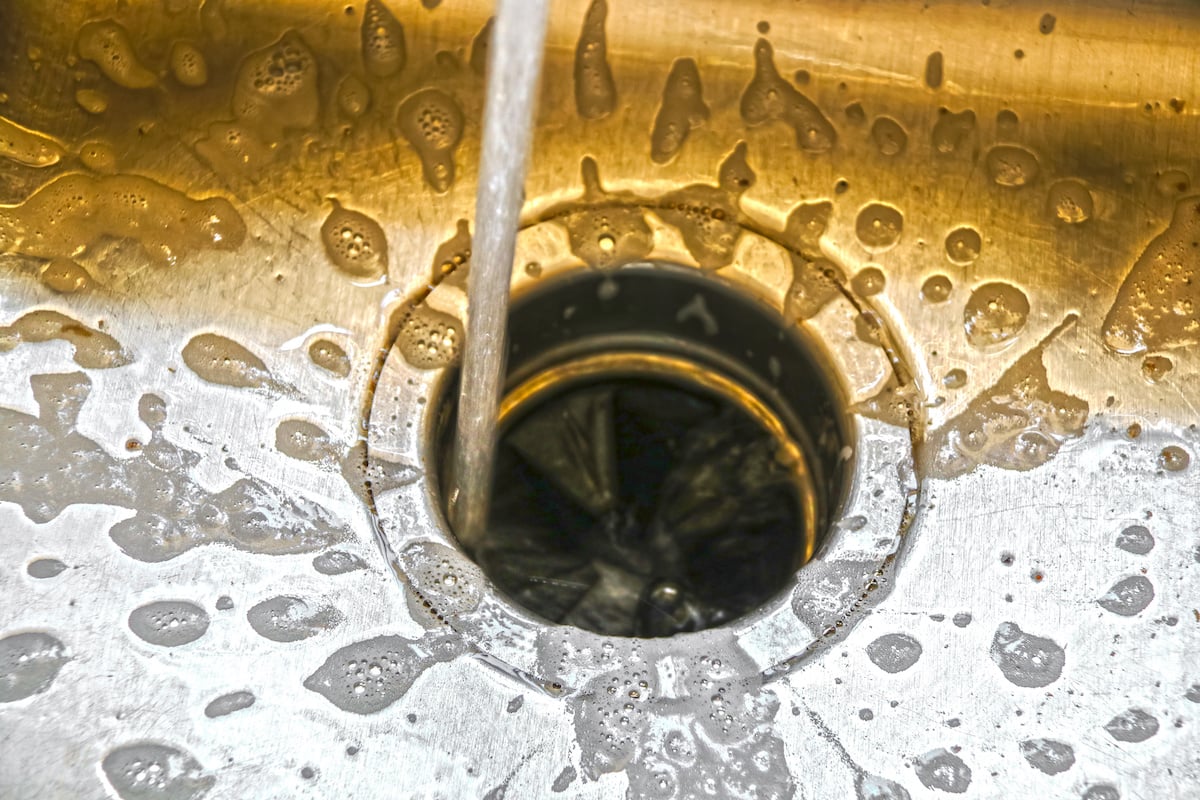
Garbage disposals are installed in half of American homes today. They are often marked as a must-have option on apartment and home seekers lists when they search for places to live.
Although garbage disposals have been used widely for over 20 years, there are still a lot of myths surrounding the usage and maintenance of them. While some of these misconceptions are harmless, others have the potential to cause serious damage to your disposal unit or your pipes.
Do you hear loud banging sounds coming from your plumbing pipes behind the wall when you turn the water faucet off – or when the water cycle ends in your washing machine or dishwasher? Or at random times? If you’ve been living with this situation for a while, you may be wondering if you need to do anything about it, or call a plumber.
This annoying phenomenon has a name: water hammer. Cut to the chase, it does need attention. The good news is that repairing the cause(s) of water hammer is relatively easy in most cases. The bad news: Allowing water hammer to continue can eventually result in leaks and even a burst pipe – necessitating a more extensive repair and possible damage to your home.
As we covered in our blog post – “What Should Homeowners Know About Plumbing?” – knowing about water hammer can help you maintain your home’s plumbing in top condition and prevent serious problems.
More Than an Annoying Noise
While many plumbing problems occur unseen until it’s too late – such as behind-the-wall or underground leaks – water hammer at least has the decency to announce that you have an issue. Our colleagues atBenjamin Franklin Plumbing describe it as follows:
“When you hear water hammer sounds in the home, this means the water in your plumbing pipes is under pressure. When it’s rushing through an open faucet and you turn it off suddenly, the flow of water slams into the closed valve, creating a hydraulic shock. The impact can cause all sorts of problems, including broken pipes, loose fittings, and damage to water-connected appliances.
“The shockwaves from water hammer can also cause your pipes to physically move from the jolt. If they’re not adequately secured to the joists in your home with suitable pipe straps, the moving pipes may bang against your walls, making even more noise and increasing the odds of damage.”
Older homes are more likely to experience water hammer. As an article inPlumbingToday notes, “Homes built before the 1960s usually have air chambers. Air chambers are basically T-sections of pipe that contain air and act as shock absorbers. However, over time the air in the chamber can become displaced by water.
“Homes built since the 1960s should have water hammer arrestors installed. Water hammer arrestors are the modern replacement for air chambers. They are spring-loaded and rarely fail.”
Also, says Tom Bigley, United Association (UA) Director of Plumbing, older homes that havepipes with 90-degree angles are more prone to water hammer.
Water hammer locations and causes
Water hammering can be caused by waterlogged air chambers, clogged chambers or excess pressure in the plumbing system. It can also be the result of a valve or pipe clog, which may produce a staccato banging sound.
However, the location of the noise or when it occurs can indicate the cause. Here are the most common, according to PlumbingToday:
Running hot water – A clicking or knocking sound starts soon after turning on a hot water tap, which may continue up to several minutes after turning it off. This could be caused by poor installation of your home’s CPVC (chlorinated polyvinyl-chloride) water lines. Because they expand with heat, CPVC lines that have been run through holes or areas that don’t leave enough room for expansion will make the telltale noise.
Solution – Find the affected pipes and give them adequate “breathing” space. We recommendhiring a professional plumber as opposed to taking the DIY approach, as this repair will most likely involve cutting into walls and/or relocating the piping.
Shutting off a water supply, either cold or hot water – This produces the true water hammer sound. It occurs when a water valve is suddenly shut off. All the water that was running crashes into the valve, shaking your pipes and creating the knocking noise. This may occur when you flush the toilet, your washing machine finishes filling with water or when your yard irrigation system shuts off. Over time, this violent motion shakes the pipes loose from their joints, causing leaks.
Solution – There is a five-step DIY fix for homes built before the 1960s, as follows:
Shut off the water to your home at the main.
Open the highest faucet in your home.
Open the lowest faucet (it’s usually outside) and let all the water drain out. At this point the air will be “refilled” in the air chambers.
Turn the lowest faucet off and turn the water main back on.
Let the top faucet run until it stops sputtering, then turn it off.
As stated previously, homes built since the ‘60s probably have water hammer arrestors installed. Piston-style arrestors have moving parts, and need to be replaced. Stainless steel constructed water hammer arrestors seldom, if ever, need replacing.
Running cold water – A knocking sound that occurs after turning on the cold water tap may be caused by high water pressure. When water flows through a pipe too fast, it bounces off the sides and into itself, which shakes the pipe. The shaking pipes can rattle against walls and other pipes. To learn if this is the issue, check your home’s incoming water pressure with a water pressure test gauge. Attach the gauge to the hose bib that is closest to your water main. Make sure no other water is being used in your house, then turn on the hose bib completely. Your water pressure should read 40-80 PSI. If the reading is higher, you’ll need tocall a plumber to add, replace or adjust your home’s pressure reducing valve (PRV).
No water is running – Hearing sounds from the pipes even when no water is running indicates sediment buildup in your water heater. In this situation, the noise is steam bubbles escaping the sediment that has built up at the bottom of the water heater tank – similar to how boiling water in a covered pot on the stove starts pushing up the pot’s top.
The unit’s heating element is at the bottom of the tank, where the sediment has settled and mixed with water. The sound can be loud enough that the reverberations carry and make it seem like the knocking is coming from the pipes in the wall, even though it isn’t.
Solution – If you have the right hands-on know-how (as opposed to watching YouTube videos), you can flush your water heater yourself. PlumbingToday providesstep-by-step instructions, but we strongly recommend youhire a professional plumber if this is not in your wheelhouse.
DIY or call a pro?
While the above list gives the recommended course of action for each situation, we want to emphasize that your level of confidence in your ability to correctly identify the cause of your home’s water hammer – and remedy it – needs to be considered. For example, in the case of troubleshooting the “shutting off the cold or hot water” scenario, you can’t be expected to know whether your older home definitely has pipes with air chambers – or if your newer home’s pipes have piston-style or stainless steel water hammer arrestors. Onlya professional plumber can make an accurate diagnosis and repair.
Our team of master plumbers at Adams and Son Plumbing recommends taking the cautious approach. If you are not mechanically inclined, or don’t feel that you have the physical capability to do the job, you should not go out of your comfort zone – even if you may be willing to risk it to save money. A botched plumbing project will ultimately cost more – not only in fixing the original problem, but in repairing the additional damage that occurred during the process.
When in doubt, contact us! We are a family-owned business with over 60 years of providing residential and commercial service throughout Central Florida. A state-certified plumbing contractor, we have over three generations of master plumbing experience. Call today to learn more and schedule a service appointment to keep your home’s plumbing in top condition. We welcome the opportunity to become your dependable family plumber!
The name water hammer sounds dramatic, doesn’t it? If you’ve ever experienced it, you’ll know there’s a reason for the drama. At the least, water hammer is an effectively descriptive name, because it sounds like a hammer striking against the pipes of your house.
Unless you have actual gremlins living in your walls who are smashing at your plumbing with miniature hammers, water hammer isn’t literal. The noise you hear is something that’s occurring inside the pipes. But it’s still not something you want to happen, and not just because it will make you jump around your own house at the abrupt noise. Water hammer can be damaging to the plumbing and to water-using appliances in the house.
The Source of Water Hammer
Water hammer is caused by a shockwave inside a pipe. Imagine you have turned on a faucet tap and water is rushing through a freshwater pipe to the outlet. You shut off the tap, and what happens? The water stops, of course. But when it stops abruptly like this, it sends off a shockwave through the pipe. If there is nothing to absorb the shockwave, it will cause the pipe to vibrate and make the sound of water hammer.
The reason you don’t normally hear water hammer whenever you turn off a tap or an appliance cuts off water flow is because plumbing is constructed to have air chambers in it that cushion the shockwave. If the air chambers become water-logged or there are worn stop valves in the pipes, it will start to create water hammer. High water pressure can also lead to water hammer.
The Problems of Water Hammer
In general, you don’t want your plumbing in Sun City, AZ to shake around every time you turn off a tap. The vibrations from water hammer will cause pipes to start to come loose or to abrade against surrounding material. As pipes loosen, the sound and the effects of water hammer will only worsen. The shockwave of water hammer is also bad for water-using appliances connected to the plumbing.
If high water pressure is causing water hammer, that is a problem all on its own—water hammer is only a symptom of numerous other troubles high water pressure can inflict on household plumbing.
Solving Water Hammer
When water hammer starts up, call our plumbers to inspect the situation and find out what’s wrong. We can then determine the best way to remedy it.
For example, if the problem is high water pressure, we can place a water pressure arrestor onto your water main. This lowers the pressure of the water entering the home and alleviates the problem throughout the plumbing. We’ll replace worn valves and restore water-logged air chambers where we find them. We can also add new air chambers by attaching a piece of vertical pipe onto the affected pipeline, adding an air buffer that will absorb the water hammer shockwave. Our plumbers will search for loose pipes that may have suffered damage and have them secured.
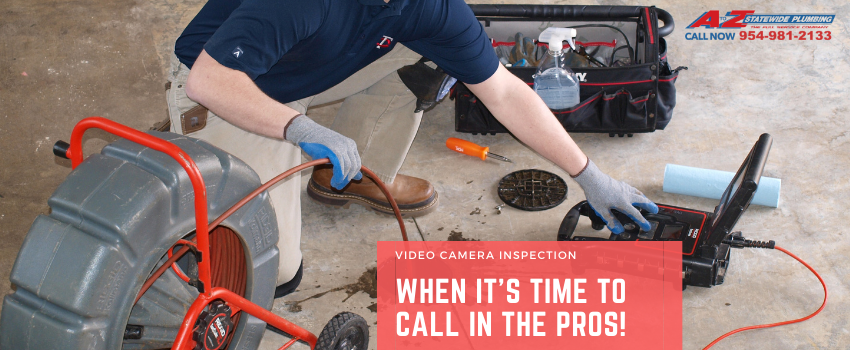
If you are noticing that your drains appear to be clogging constantly or that there are unusual smells coming from your pipes, then it is time for the professionals to take a closer look at your plumbing system. It can be hard to detect issues inside of your drains because you don’t see them on a regular basis. This is where a video inspection can help. There are a few signs that it is time for you to call the professional for a video inspection of your pipelines.
The Smell of Sewage
If you are noticing that there is a strong smell of sewage around your property, then there is a good chance that your sewer line has cracked. The smell is coming from material leaking out of the lines. It can be extremely expensive to clean up this issue and it can be hazardous to your health. Call the professionals immediately if you are noticing the smell of sewer water in or around your home.
Water Bills Are Climbing
Often, the first sign that there is something wrong with your plumbing system is that your water bills start to rise. If you don’t have a bunch of extra guests in your home, then there is no reason for your water usage to be climbing. This is a sign that there could be a leak in one of your lines. To put a stop to these water bills (and to prevent a flood in your home), you need to contact the professionals for a video inspection so they can find the leak.
Random Green Patches in the Yard
If there is a section of your yard that looks like it is perfectly green, then this patch could be receiving more water. This could come from a leak in one of your lines. This commonly takes place when roots infiltrate your plumbing system. It is time for a video inspection.
Contact the Experts for a Video Inspection Today!
If you are noticing any of these issues, reach out to us for a video inspection. Contact the friendly technicians at A to Z Statewide Plumbing today at 954-981-2133!
Trending Topics Right Now
Aaron Atkins
Delivering exceptional customer service is first and foremost, but, when he is not focused on supplying your home or business with the highest level of customer support, Aaron prefers to lace up the running shoes and pound pavement for hours on end. Originally hailing from the snowbelt of Pennsylvania, Aaron currently resides in sunny South Florida with his wife and three children.
We are a participant in the Amazon Services LLC Associates Program, an affiliate advertising program designed to provide a means for us to earn fees by linking to Amazon.com and affiliated sites.
Learning how to unclog a toilet without a plunger is a skill you should pick up. Not only is this simpler than you imagine, but it’s also a life skill that has the potential to save you from an unfortunate situation.
Imagine visiting a friend or using the office bathroom only to find you’ve somehow clogged the toilet and there is no plunger readily available. You could go ask for help and risk the embarrassment you might feel in doing so, or you can apply this life lesson to the situation. If there is a chance you can avoid sharing your unsavory moment with the general public, learning how to unclog a toilet without a plunger is the way to do it.
If you want to learn how to unclog a toilet without a plunger, you are not alone. Whether you’re in a hotel without a plunger or just looking to avoid embarrassment in someone’s home, knowing how to do this can save you time as well as more serious issues. Keep in mind that it might not always work if the problem causing the toilet to clog is complex, but it doesn’t hurt to know how to unclog a toilet without a plunger.
Common Reasons a Toilet Gets Clogged
Before learning how to unclog a toilet without a plunger, it’s helpful to understand what makes toilets clog. Knowing the causes can help you diagnose and stop the problem before it becomes a disaster. Here are some of the most common causes of clogged toilets:
1. You’re Dealing with an Old Toilet
Newer, fancier, more technologically advanced toilets are less likely to become clogged thanks to the flow. Older toilets, on the other hand, are commonly low-flow toilets. This means they don’t have the type of pressure needed to successfully push a clog through the pipes when it occurs.
The water backs up, the toilet clogs, and the problem won’t rectify itself without a little assistance.
2. You’ve Got a Blocked Trap
If you’re not familiar with a toilet trap, don’t be alarmed. It’s the official name for that curve in the pipes inside your toilet. You can see the opening if you look down into the toilet, and it does have a unique and important purpose.
This is where the water sits when your toilet is unused, and it’s also used to prevent the gasses from inside the sewer from escaping into your home. Those are toxic and dangerous, so this is an important part of your toilet.
It’s not always obvious when there is a clog if it’s not big enough to remain visible, but it’s possible for it to be clogged just outside of eyesight range.
3. You’re Dealing with Non-Flushable Items
Unfortunately, many people have no idea what can and cannot be flushed into a toilet, and what can be flushed depends heavily on the kind of toilet you’re dealing with. For example, feminine hygiene products aren’t typically wise to flush, but some newer toilets handle them without issue.
Kids commonly cause problems with non-flushable items, too. If they drop a toy or flush something they shouldn’t, you may end up with a clog you don’t want.
4. Your Vent is Blocked
All toilets have a roof vent to help with fresh air and other functions. If yours is clogged, it might prevent your toilet from functioning properly by reducing the flow of the water in the drain. Leaves and other debris can cause your vent to become blocked easily.
It’s also possible an animal built a nest in the vent and caused blockage without your awareness.
5. You’re Dealing with Sewer Line Problems or Septic Issues
One of the most common causes of toilet clogs is a sewer line issue, but that’s a problem for the pros. There’s very little you can do about this on your own.
Additionally, if your septic tank is full, you’ll need to hire a professional company with a pump to come to clean it out for you.
How to Unclog a Toilet Without a Plunger
Many people have no idea it’s possible to learn how to unclog a toilet without a plunger, and how simple it is might shock you. These are helpful tools that can help you avoid problems when you have no plunger, but they may not always work if the problem is serious.
1. Use Dish Soap
Sometimes, all it takes is a bit of lubricant to help things flush through the pipes. For example, if your toilet is clogged, pouring a little dish soap down the drain can help lubricate the tissue and cause it to clear up. A half-cup is all it takes to remove clogs from the drain in most instances.
Learning how to unclog a toilet without a plunger means learning all the tips and tricks, and this is one of those tricks. However, it might not always work for you. This is when you should add some hot water to the mix. The soap may not do the job on its own without some hot water.
Do not boil water because it’s too hot and can cause cracks in the porcelain. Additionally, you need to pour this hot water from the level of your waist so it creates more force. The force is what might help loosen the clog.
2. Use a Hanger
If you’ve graduated to using plastic or cloth hangers for your clothes, don’t throw away all those wire hangers just yet. Find a place to store a few of them so you can use them in a pinch.
You can create a snake by unraveling a wire hanger. Carefully push it down into the toilet to push any clogged or trapped items out. This is a tool that might help even if you have a plunger and it’s not working.
3. Mix Baking Soda and Vinegar
This is another method that might help you get your toilet to flush again. You’ll need a little more time and a little more work to make it happen, but it’s a good technique.
Mix a cup of baking soda with two cups of vinegar. Put the mixture into the toilet and leave it for a half-hour. When the time is up, the clog should be gone.
If it’s not gone yet, try reusing the hot water trick to see if that additional force can eliminate the problem.
4. Use a Water Bottle
This is a dirty, messy, last resort measure. Start by removing as much water as you can from your toilet to prevent it from becoming too messy. Use a plastic bottle to do the rest of the job.
Put water in the bottle and place your thumb over the top of the bottle to keep the water inside the bottle. Gloves are helpful when you do this.
Next, shove the top of the bottle and your hand into the curve at the bottom of the toilet bowl and remove your thumb. The water from inside the bottle will shoot down into the toilet with force, and it might cause the clog to move along.
Tips and Tricks to Keeping Your Toilet Flowing
It’s easy to learn how to unclog a toilet without a plunger, but it’s even more helpful to learn how to keep your toilet from clogging in the first place. You cannot prevent every clog, but you can use these tips and tricks to help you keep your toilet flow as successful as possible:
These are all simple yet effective ways to maintain a working toilet all year long. You cannot always predict issues with your plumbing, nor can you stop people from flushing things they shouldn’t if you aren’t warning them or watching them, but you can do your best to maintain your toilet to the best of your abilities.
Conclusion
Learning how to unclog a toilet without a plunger is only half the battle. Once you know how to do this, you’re going to find life is much easier when you’re in a pinch.
However, it’s just as important you learn how to recognize when you can fix a problem yourself and when you cannot. It’s not always easy to fix a toilet without a plunger, and it’s not always possible to fix a clog or other plumbing issue without calling a professional.
It’s all right to attempt fixing the problem yourself, but it’s wise to know when to throw in the towel and call someone to help you with your needs.
It’s often less expensive to call for help than it is to try something yourself when you don’t know what you’re doing or how to do it. Learn these things, and your plumbing issues should be few and far between.
When you read our blogs, how much do you really get out of them? From advice to friendly service tips, we go out of our way to ensure everyone in the Cedar Grove area has access to the professional knowledge they need for plumbing, heating, cooling, and basically any home comfort service. Though, do you listen to us when we talk about calling our team?

You might be thinking that it’s handy to check out our blog while you call your “guy” to perform some well-needed HVAC services in Cedar Grove, NJ. It’s a good idea, and we won’t knock your personal preference for who you hire to do work in your home.
However, we won’t back down that easily. We’re going to talk today about why we could be a better choice than the “guy” you’ve been calling for years, and the money you save could grant an extra vacation or two down the line.
Quality and Honesty
When it comes to the HVAC industry, we can’t mention enough how important quality work and honest advice are. There are too many companies who will go out on a limb to have customers constantly call them for repairs so they can make an extra buck. Often, with those kinds of companies, relationships come secondary to profit. That’s just not how our company works.
Quality is what keeps you coming back to us. We don’t need to only repair certain parts of your heating system if repairing more parts will keep it running more efficiently in the long run. Our quality service can make you feel better knowing that there’s dedicated craftsmanship that goes into every repair we make. Honesty is what lets you know that you’re getting a good deal. We’re not going to lie to you about the condition of your plumbing system, or the state of your air conditioner. If we think it might be a cost-effective move to replace a whole system, we’ll tell you even if it’s hard.
Local and Community-Oriented.
When you work with us, you get the fast service of a large corporation with the down to earth staff of a local crew. Our team lives in this community, we’ve been here serving people since 1998. It’s why we’ve got so many good stories to tell about our plumbing, heating, cooling, and indoor air quality services!
Seriously, give us a call and ask our team about the time we found snakes inside one of our neighbor’s air conditioning unit. They had made a nest in the outside cabinet and one had even coiled around the fan! Or how about the time we were installing a new heating system for a customer and we discovered a whole duck in the chimney! It’s safe to say that his goose was cooked.
Simply put, we’re a local team of experts that are community-oriented. We enjoy the stories we hear from our customers and neighbors, and we make sure to treat everyone we work with like family. If your “pro” doesn’t give you that level of dedication, or if the company you regularly sign up with doesn’t treat you like family, then it’s time to switch.
We’re moving into the holiday season now. We just got past Thanksgiving, and we’re moving into all the festivities during December now. Your plumbing system is vital throughout the year, and it’s more important than ever now. You’re probably using this system more than ever now. That’s why it’s important to keep it in impeccable shape.
If you’re ever looking for help with your plumbing in Apopka, you can find exactly what you’re looking for with our professionals. Today though, we’re here to give you some helpful tips. You can keep these tips in mind to keep your plumbing in impeccable shape this holiday season.
Helpful Plumbing Tips
Keep these plumbing tips in mind this winter. It’s going to help you keep your home clean, healthy, and cost-effective.
1. Avoid F.O.G.
F.O.G. stands for fat, oil, and grease. These are three things that you should always avoid when it comes to your home’s plumbing system. These substances have the ability to cake up and clog your home’s drains.
We know that things get hectic during the holiday season and some of your “best practices” might go flying out the window. Don’t make this one of them. This is likely to cause you expensive repair problems in the future.
2. Never Use Chemical Drain Cleaners
We know that if you encounter a clog your knee-jerk reaction might be to run to your local store and pick up a chemical drain cleaner. You should know though that these drain cleaners are terrible for your plumbing long-term. Yes, this might handle the issue you’re having for now, but it’s going to wear your plumbing down in the long-run. The solutions also won’t fully get rid of the build-up in your drain.
3. Don’t Ignore Leaks
There’s something dripping underneath your sink, but you don’t want to call a professional to handle it right now. You’re having a hectic holiday season picking up gifts and cooking up meals. You’re going to try to patch it up on your own and deal with this later.
This isn’t what you want to do! You’re only giving this problem an opportunity to worsen. Reach out to us to fix your leaking pipes.
4. Know What to Flush
Do you know what you should flush? Those “flushable” wipes really aren’t helpful though. They might advertise themselves as flushable, but these are the perfect storm for a toilet clog. It’s going to back up in your pipes and cause a clog or a slow-down in your home. Knowing what to flush will save you a great deal of grief.
5. Note Low Waterflow
If you notice that your home’s waterflow starts to decrease over this season then it means that you should pick up the phone and call us. We’re lucky that we live in Florida where the weather is warm year-round. This means that you won’t have to deal with low waterflow due to pipe freezes. You might have to deal with this issue because of bad build-up though. This is a problem and we’re here to address it for you.
Contact Modern Plumbing Industries, Inc. today to schedule an appointment for your plumbing services.
Do you know the purpose of a sump pump? Many people have them in their basements or crawl spaces but don’t fully understand what sump pumps do. They just hear a motor running from time to time, followed by a sucking noise.
If you haven’t owned a sump pump before and then purchase one, then you’ll have a much clearer sense of their purpose. Moreover, a simple sump pump installation could save your basement from damaging flooding and other water catastrophes.
This article explains the sump pump purpose and uses, sump pump installation, sump pump maintenance, and other information about sump pumps. If you’re interested, read on!
The Purpose of a Sump Pump
What is a sump pump? Its fundamental purpose, of course, is to remove water from your basement or crawlspace and keep these areas dry. But it has several other related purposes you might not have considered, including the following.
Protecting the Foundation
In some cases, especially where the water table is high, water from the soil can damage the foundation. As the water flows downward, the sump pump disperses it away from the house.
Preventing the Spread of Mold, Mildew, and Bacteria
Places with moisture in the air and on surfaces are a haven for annoying and potentially harmful microorganisms. Keeping the basement dry with a sump pump curtails their growth.
Protecting Basement Appliances from Corrosion
If your basement floods and there’s standing water for any amount of time, your appliances will start to rust. Depending on the water level, they also might have internal damage.
Removing Foul Odors and Improving Air Quality
As we all know, most flood water is dirty and might contain sewage or other waste products. A significant purpose of a sump pump is to get this water out of the house. The nasty smell is merely a warning of worse things.
Alerting Homeowners When the Water Level is Too High
Most sump pumps have high-water alarms. Some have low-water alarms too. Having a sump pump alarm allows homeowners to call for expert help before an overflow or another incident occurs.
In fact, any time you might think there’s something wrong with your sump pump, call a plumber to check it out.
Adding Value to the Home
Not every home has a sump pump, but most prospective home buyers (or at least their home inspectors or real estate agents) know a good thing when they see it. A house with an installed sump pump is one of those things.
A sump pump doesn’t quite equal a soaking tub in the master bathroom or granite countertops in the kitchen. But it’s definitely an asset, as well as a sign of a well-cared-for home.
Upholding Flood Insurance Requirements
If you live on a flood plain or have had a pipe burst in the past, you probably know enough to have flood insurance. Many policies require a functioning sump pump or other flood mitigation measures.
Stabilizing the Soil
By moving groundwater away from your basement and house, a sump pump reduces hydrostatic pressure on the foundation, thereby stabilizing the soil around the foundation.
What Is a Sump Pump’s Structure?
A sump pump typically sits in a sump pit, which is a hole with a gravel base. A sump pit is about 60 centimeters deep and 45 centimeters wide. You will usually find the sump pit in the lowest spot in a basement or crawlspace.
Sump Pump Types
There are two basic sump pump types. The first, a submersible pump, rests in the water, enclosed in a waterproof housing. The actual pump is at the bottom of the pit, and the outlet pipe near the top.
The second, a pedestal pump, sits on a long stick or tube that keeps it out of the water. An intake pipe goes to the bottom of the pit to draw out the water.
Activating the Pump
Most sump pumps switch on automatically using either a float activator arm or a pressure sensor. The pressure sensor works just like its name suggests: Because water places stronger pressure on the sensor than the air does, it activates the pump.
The float activator works a lot like the float in your toilet tank (if you still have one). A floating ball rises to the top of the water and manually moves the arm as the water rises.
As with many plumbing mechanisms, many of a sump pump’s actions occur through gravity and water pressure.
Sump Pump Installation
Installing a sump pump is not a DIY project for most homeowners to undertake—although sound written instructions for doing so are available online. Even the handiest homeowners often miss critical steps or make mistakes in their execution.
You need to contact a professional plumber who has sump pump knowledge and experience. Plus, many of us offer written guarantees on the work we do.
Sump Pump Maintenance
Your sump should receive semi-annual or at least annual maintenance. You can do this yourself or hire a plumber to do it for you.
Here are the steps:
1. Unplug the pump and remove it from the pit. Then examine it for rust, and be sure to clean the pump inlet screen.
2. Check the owner’s manual about whether the pump bearings need lubrication. If so, lubricate them with the recommended oil or grease.
3. Check the sump basin and remove any debris.
4. Put the pump back into the pit, connect it, and plug it in.
5. Pour a bucket of water into the basin and watch the float switch. You should be confident that the float moves through its entire process without getting stuck and that it turns the pump on and off when it should.
6. Go outside and check the state of the pump’s discharge pipe. It should not be obstructed by dirt or vegetation. Then verify that it drains fully and doesn’t contain leftover water that could freeze in winter. Freezing could rupture the pipe or obstruct its flow.
The purpose of a sump pump is straightforward: to remove excess water. Yet, some articles we read on this topic cite other purposes too—ones the sump pump’s inventors would never have thought of.
Basements are known for flooding—whether it’s stormwater, a burst pipe, a leaking water heater. Or some other cause. Whatever it might be, we hope you now have a clearer idea of how a sump pump could help.
Since Anta Plumbing installs and maintains sump pumps, we would be happy to help you with yours. Just reach out to us when you’re ready.
Having a garbage disposal allows you to dispose of (select) food waste easily into your sink. While it does add convenience to your kitchen cleanup, there is the possibility of it leaking. Garbage disposals can leak for multiple reasons, but here are the most common causes of these leaks and where they may stem from.
My Garbage Disposal Is Leaking from the Top
Likely Cause: A Loose Sink Flange
Your sink flange is the piece that connects the garbage disposal to the sink drain. Garbage disposals are typically connected to your sink via the flange and plumber’s putty. Leaks commonly occur here when the connection between the sink flange and the sink drain isn’t tight enough or the connection has corroded over time. Here’s what you can do if you suspect your connection is failing:
Check the mounting bolts. Your mounting bolts connect the flange to the drain. Make sure they are fastened tightly.
Check the plumber’s putty. If the plumber’s putty that helps seal your disposal in place has been compromised, simply loosen the bolts, add new plumber’s putty, and then retighten the bolts.
My Garbage Disposal Is Leaking from the Side
Likely Cause: Drain Line Connection
In many cases, the drain pipe from the dishwasher is connected to the garbage disposal. This drain pipe will remove any excess food debris and water from the dishwasher into the garbage disposal.
Check the clamp. Your main drain line is connected by screws and a rubber gasket on the inside. If the metal clamp connecting your dishwasher to your garbage disposal is loose, you can try to tighten it with a screwdriver.
Inspect the hose. Look for any cracks or hard, dried-out areas in the hose connecting your dishwasher to your garbage disposal. If your hose is compromised, replace it before running your dishwasher again.
My Garbage Disposal Is Leaking from the Bottom
Likely Cause: A Busted Internal Seal
Depending on the age and use of your disposal, it could be worn out, leading to internal damage. If your disposal is leaking from the bottom (and not just dripping from an area higher up), the cause is usually the garbage disposal itself. There are internal seals that can wear out over time, leading to leaks and disposal failure.
Inspect the body of your garbage disposal. Look for any cracks or wet spots on the body of the unit. Unfortunately, if the disposal is cracked, the entire unit likely needs to be replaced.
Check for shifts in your garbage disposal’s position. Garbage disposals live underneath the sink alongside most of the cleaning supplies in your home. If the disposal has been knocked or bumped, it could have shifted out of place. Ensure that the disposal is sitting upright, and if it has shifted, realign it. Then, inspect the seals and plumber’s putty, resealing it if necessary.
Fixing a garbage disposal leak isn’t always a difficult task that requires a professional, but you do have to know where to look and how to go about fixing it. When your garbage disposal or sink plumbing needs repair, you don’t have to worry about DIY fixes. Nor is it necessary to scour the internet for how-to videos.
Simply contact Len The Plumber! We’ll inspect your home’s garbage disposal and provide you with comprehensive repairs or replacement services when needed. To learn more or to schedule an appointment, give us a call at (800) 950-4619.
We are a participant in the Amazon Services LLC Associates Program, an affiliate advertising program designed to provide a means for us to earn fees by linking to Amazon.com and affiliated sites.
No bathroom is complete without a quality Kohler Elliston toilet. If you require an easy to clean, reliable throne, then the Kohler brand offers unparalleled value and design to create the perfect bathroom. And with a sleek contemporary feel, the Kohler Elliston toilet may suit various interior schemes without looking out of place.
From high-quality residential toilets to functional, reliable commercial units, Kohler provides toilets for every occasion. The quality of the ceramics and the exceptional eye for detail ensure that the Kohler Elliston toilet stands the test of time. Not only that, but the unit comes packed with beneficial features to make installation and cleaning a breeze.
The Kohler Elliston Toilet
The Kohler brand has a reputation for designing high-quality toilets packed with user-friendly features at excellent prices. We live in uncertain times, and when we spend on home improvements, we need to feel confident that the investment offers a long-term solution together with good value. Installing a Kohler Elliston toilet provides long-lasting quality and excellent value.
Kohler has numerous models of thrones, from a dual flush toilet, one-piece designs, and elongated bowls. If you find yourself working with a tight budget, you don’t have to sacrifice the luxury of a powerful flushing system or water-saving features.
The Kohler Ellison comfort height toilet is a two-piece elongated unit. The toilet offers water-saving features with a 1.28-gallon flush and a comfortable, quiet-close seat.
Additionally, as part of Kohler’s innovative comfort height range, the toilet sits at chair height, making it incredibly easy to use.
It’s All About the Base
As we sit comfortably on our throne, few of us may consider what material we sit on. Kohler uses various high-quality materials to build each toilet, including vitreous china, china, ceramic, and porcelain.
The robust nature of the materials creates a toilet that is easy to clean and stands the test of time. For residential and commercial purposes, the materials’ tough qualities remain an essential factor for the longevity of the toilet’s appearance and use.
Style personified
The Kohler Elliston toilet combines classical architectural design elements with bold contemporary aesthetics. Consequently, the toilet may work well in a variety of bathroom interiors.
The base is made from vitreous china, which is a glazing technique applied over a porcelain base. The glass-based enamel produces a material that remains tougher, denser, and shinier than many alternatives, making it the perfect choice for the Kohler Elliston toilet.
How to care for your vitreous china toilet
Kohler recommends using a soft cloth to wipe the toilet after each use to keep it in prime condition. Products such as Cif Power & Shine may be the ideal solution to cleaning the toilet’s surface.
Two-piece construction
One of the best features of the Kohler Elliston toilet is the two-piece design, meaning that the tank and the bowl remain separate.
The bowl is an elongated design, which means more space on which to sit. Consequently, the thoughtful design of the toilet provides the user with a comfortable experience.
The advantage of a two-piece toilet
A two-piece toilet proves easier to repair because you may replace just the tank or the base as required. Plus, a two-piece toilet may prove easier to fit because it doesn’t weigh as much as a single piece unit.
The disadvantages of a two-piece toilet
A two-piece toilet tends to take up more room than a single unit. And because you have to fit two separate parts, some users may find it challenging to fit. Additionally, the two-part construction means more joins, which may take longer to clean.
Comfortable to use
Kohler cleverly designs their comfort fit toilets to correspond to the height of an average chair. That helps users with lower back problems stand up and sit down easily when using the toilet.
Size matters
By nature, a two-piece toilet is larger than a single unit.
The Kohler Elliston toilet measures 30 x 16.75 x 30.5 inches, which makes it a considerable unit. However, the smart design of the toilet negates the size as it is gorgeous to look at.
Also, the toilet weighs in at 107 pounds.
If size is a limiting factor for your bathroom, ensure you measure the space accurately before purchasing your unit.
Performance
There are no essential differences between the performance of a two-piece toilet when compared to a single. Both types of toilets offer similar features with water-saving properties and efficient flushing systems.
The difference boils down to the height and comfort of the units. The toilet is for comfort, and if that remains a priority, then the Kohler Elliston toilet is the perfect choice.
Water-Saving Innovation
In a world where we remain mindful of our environment, technology continues to push forward for the planet’s benefit, especially with water-saving innovations. Water is a precious commodity, and by using water-saving fixtures in our bathrooms, we may help protect the planet.
The law
Flushing a toilet always felt so wasteful, and before 1992, the average toilet flushed away at least 3.5 gallons with every use. However, in 1992, the federal government passed a new standard for toilet manufacturers with the sole purpose of conserving water usage.
The standard means that no toilet may use more than 1.6 gallons of water per flush. Consequently, flushing a modern toilet saves money for the consumer and conserves water.
A Kohler Elliston toilet will save you money with every flush because each design contains water-saving features.
Water consumption
The Kohler Elliston toilet uses 1.28 gallons of water with each flush, which makes it incredibly efficient. So, you may find that you will save money on your water bill when installing this particular toilet model.
However, even though the unit uses less water, it doesn’t compromise the toilet’s flushing capabilities. Innovative technology installed in the flushing unit ensures a clean, thorough flush every time.
Flush Away Your Woes
Kohler has a reputation for employing exceptional technology in their toilets, and the Kohler Elliston toilet is no exception, despite the reasonable price tag.
The powerful flushing system generates a flush that clears all the bowl contents with a single water flush. Additionally, the toilet has a polished chrome lever on the left-hand side for convenient flushing.
Class Five technology
Kohler’s registered Class Five technology generates a strong flush. Single-flush gravity uses the force of gravity and a precision-engineered tank, bowl, and trap-way to create a powerful siphon during flushing.
An AquaPiston canister allows water to flow out of the tank from all sides to increase each flush’s effectiveness.
The durable canister design has 90 percent less exposed seal material than a standard 3-inch flapper to provide leak-free performance. Furthermore, the light-touch canister flush uses a lower actuation force than a flapper for efficient operation.
Installation
A one-piece toilet may be a challenge to fit due to the unit’s weight, especially in smaller spaces. However, a two-piece toilet could be easier to fit due to the tank’s separate nature and base. The individual parts feel more comfortable to handle and maneuver into position.
Installing the Kohler Elliston toilet
The manufacturer describes the toilet as a standard 12-inch rough-in with a 2-bolt installation. However, the one downside to this derives from the toilet supply line, which you must buy separately.
Anyone with a basic knowledge of DIY may tackle the toilet’s installation, though you may need additional help to maneuver the toilet into position. Despite the two-part construction, each element is heavy, and you don’t want to risk damaging them when you install the toilet.
The toilet comes with detailed, comprehensive instructions for installation.
Weighing up the Toilet
The Kohler Elliston toilet has a lot going for it, but we need to understand the toilet’s pros and cons to present a balanced review.
The pros
Most users report that the toilet remains easy to install without the need to hire expensive professionals. So, that is a significant advantage when working with a tight budget.
The height of the toilet makes it incredibly easy to use. Anyone suffering from back issues may find the unit comfortable to sit on and easy to stand up from.
The toilet features an elongated base, which gives you additional comfort and space. The feature further enhances the comfort fit nature of the model.
A WaterSense certificate proves the efficiency of water consumption. The low water usage should save you money over time and help protect the environment.
The Class Five technology in the flushing system ensures a clean bowl with every flush. The strong siphon clears the toilet quickly and efficiently.
Plus, vitreous china is easy to clean and gives the toilet a tough, durable finish. Not only that, the attractive chrome handle is conveniently on the left-hand side.
The cons
You must purchase the toilet supply line separately before you install the toilet.
Two-part toilets may feel awkward to fit for some users, and you may wish to employ a professional.
Some users found that the fill valve jammed occasionally and needed repair.
The nature of the two-part construction may make cleaning a bit of an issue because of the joins where the cistern meets the base.
Finally, you cannot choose which side to have the flush handle, limiting the toilet’s positioning.
The Final Flush
The Kohler Elliston toilet provides everything a family requires from a toilet. The elegant, clean lines of the design mean the fixture may suit various bathroom interiors and add a sense of style to your décor.
This particular toilet is a two-piece unit, and most users report that the toilet is easy to install despite the need to buy a separate supply line. Plus, the height of the toilet provides the user with a comfortable experience. The toilet is easy to sit on and easy to get off.
Also, the elongated seat adds additional comfort. So, the toilet proves ideal for elderly household members and those experiencing back problems, in particular.
The efficient flushing system uses very little water, which may save you money in the long run. But despite the low water consumption, the flushing capabilities of the toilet remain uncompromised. With strong rinsing power, the flush leaves the bowl clean and clear after every flush.
Money-Saving Innovation
Kohler remains a brand providing excellence and innovation in its comprehensive range of bathroom fittings. An eye for detail and a love of technology shine through their products to bring a strong design ethos to our homes, reflecting the need to protect the environment.
In this time of uncertainty, we know all too well the importance of spending money wisely. Therefore, the Kohler Elliston toilet represents excellent value for money while giving the user a superb and comfortable experience.
With just enough unique features to make the toilet special and keep the price low, the Kohler Elliston toilet represents an excellent addition to any home.
Do you have any experience fitting Kohler toilets? Why not share your experience with us by commenting in the box below?
Sean Kerr lives in Cardiff, Wales, and is a published author with over 10 novels to his name so far and still counting. As well as writing his next bestseller, Sean also runs a successful jewelry making business and sells his creations online.